
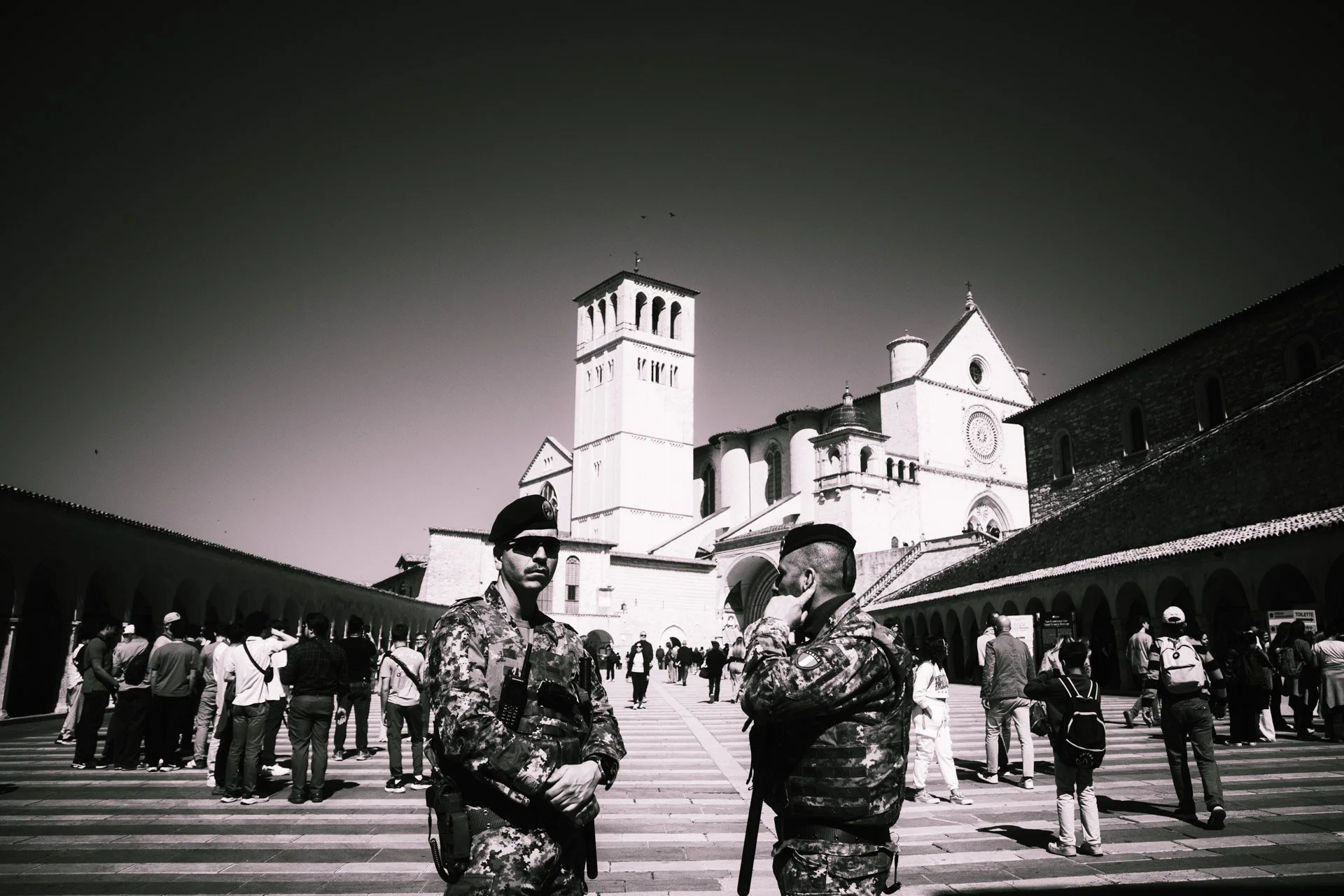
Two Months with the Ricoh GR IVx — Shot in Italy
I'll be honest: I almost didn't buy it. The GR line has been beloved by street photographers for years, but picking up a dedicated compact in 2026 feels like a counterintuitive move. My Sony was doing just fine. But something kept pulling me toward the GR IVx — the cult following, the f/2.8 lens, the idea of showing up somewhere with just this small black rectangle in my pocket and nothing else.
So I bought one two months ago. And then I booked a trip to Italy.
What followed were three weeks across Rome, Florence, and Venice — shooting with nothing but the Ricoh. These are my honest thoughts, with the photos to back them up.
Quick answer
The Ricoh GR IVx is the best pocketable camera for travel and street photography available right now. At 40mm equivalent with a 26MP APS-C sensor, it disappears into your pocket but delivers full-frame-rivaling image quality. After two months shooting Rome, Florence, and Venice, I can say it fundamentally changed how I photograph — and how I travel.
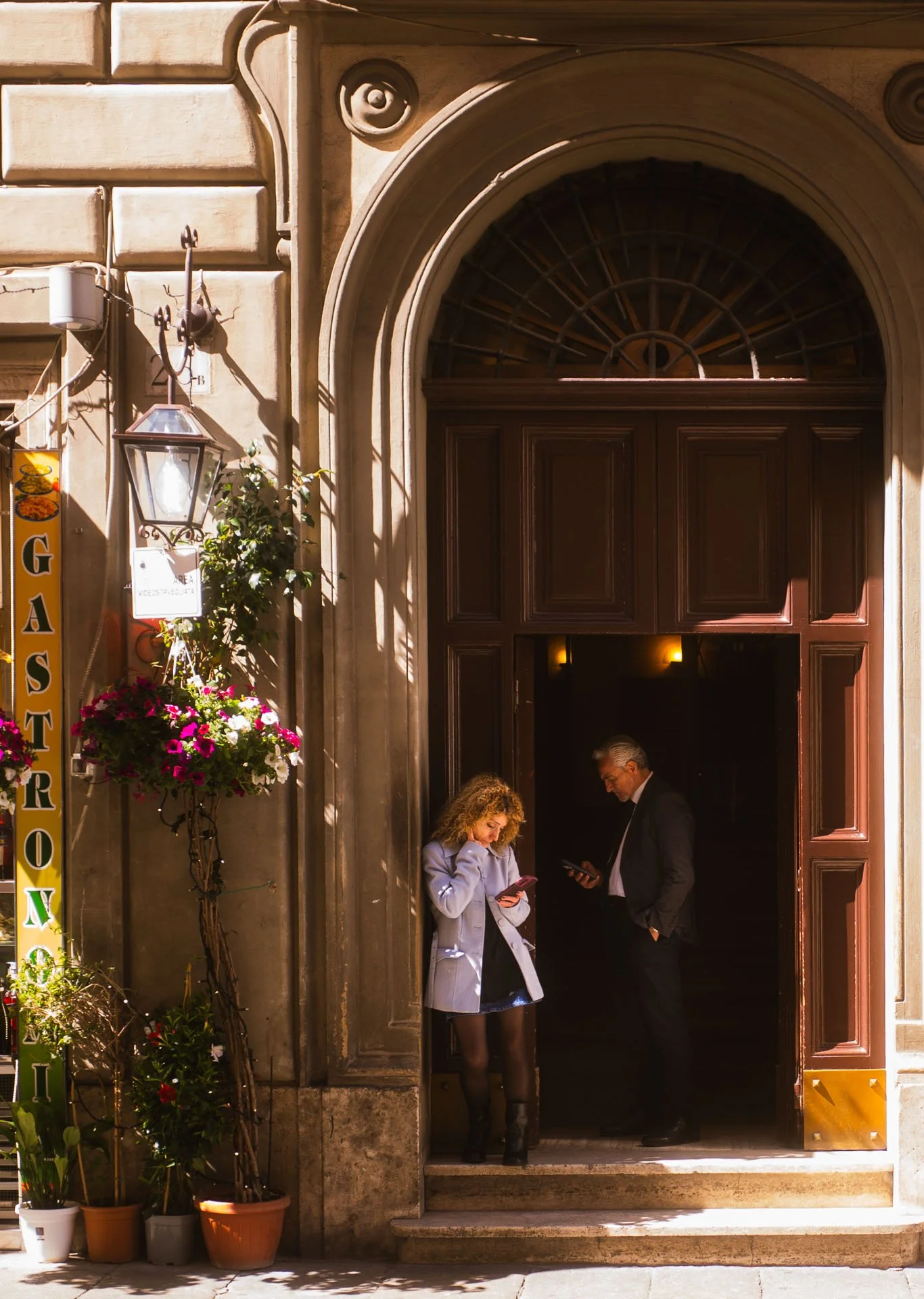
Rome. Two people paused in a grand archway — both on their phones, completely unaware. Late afternoon light sliced across the facade. Shot from across the street at f/2.8.
Why small changes everything
The first thing you notice about carrying the GR IVx isn't what it can do — it's what it stops doing to people around you. A DSLR or mirrorless with a big lens changes the energy in a scene. People clock it. They tense up, move away, or worse, pose. The Ricoh doesn't do any of that.
In Rome especially, where the streets are perpetually alive with tourists and locals weaving past each other, I could move through scenes without disrupting them. Nobody gave me a second look. I was just another guy with something small in his hand. The cult following, the f/2.8 lens, the idea of showing up somewhere with just this small black rectangle in my pocket and nothing else.
So I bought one two months ago. And then I booked a trip to Italy.
What followed were three weeks across Rome, Florence, and Venice — shooting with nothing but the Ricoh. These are my honest thoughts, with the photos to back them up.
The 40mm equivalent (up from the GR III's 28mm) was a deliberate choice I was initially skeptical about. 28mm felt more classically "street." But 40mm turned out to be almost perfect for how I naturally frame — tight enough to isolate subjects, wide enough to include environment. After a week, I stopped thinking about it.
40mm
Equivalent focal length
26MP
APS-C sensor
f/2.8
Fixed aperture
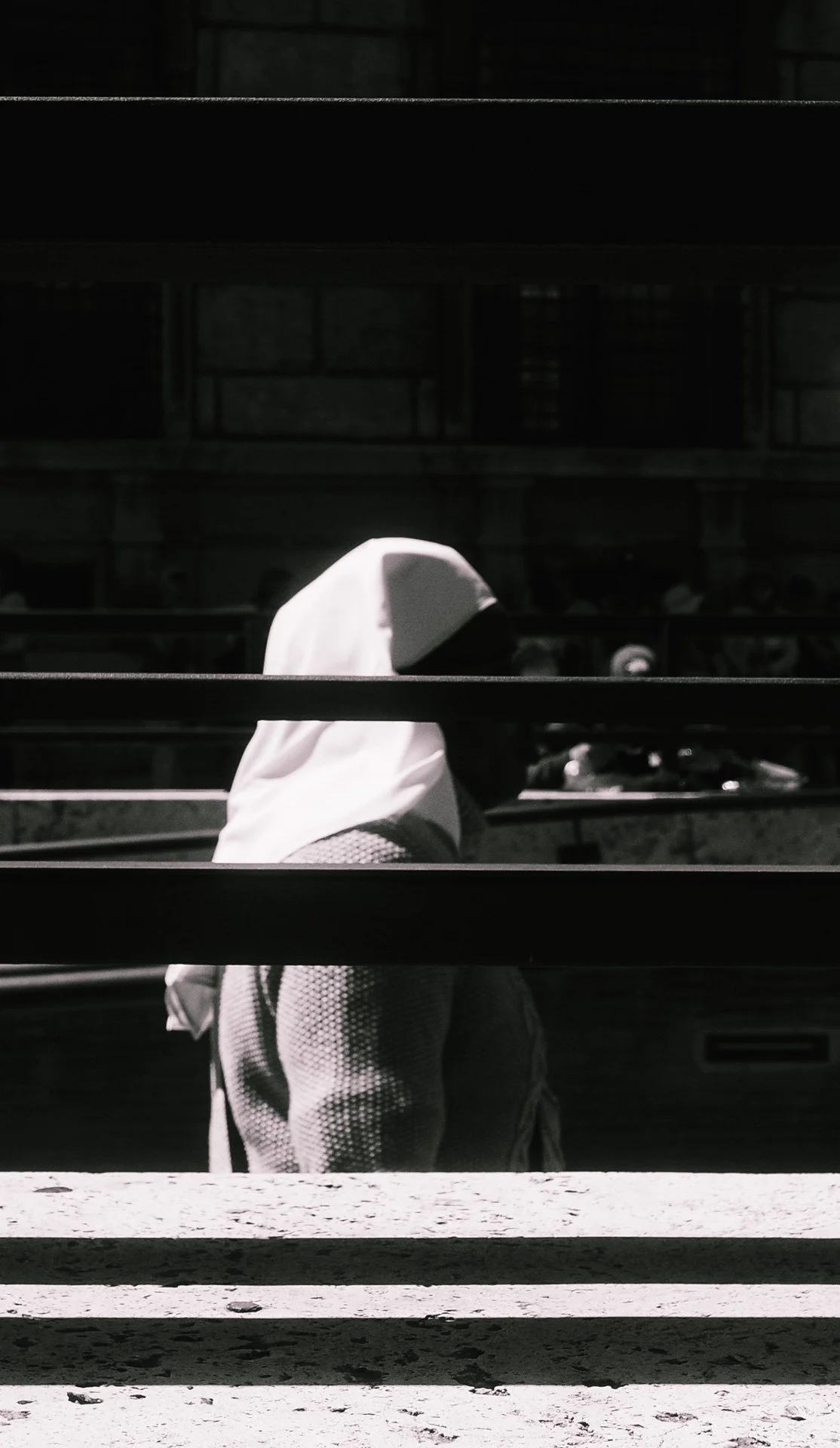
Rome. I almost walked past this. A nun moving through a gated courtyard — the horizontal bars of the railing creating this natural graphic structure. I had maybe two seconds. Snap, move on.
The camera forces a certain discipline. One focal length, one aperture at its widest. You start seeing in 40mm. That's not a limitation — it's a practice.
Shooting in low light: the honest version
Italy at night is its own thing. The combination of warm tungsten interiors, neon signs, and deep shadow pockets everywhere — it's a photographer's dream that also punishes every weakness in your gear. The GR IVx handles it better than I expected, but not without tradeoffs.
High ISO performance is genuinely strong up to about ISO 3200. Beyond that, you start to see noise — it's grain, not mud, which is actually pleasant for street work. I leaned into it. Some of the most atmospheric shots from the trip came from scenes I would've written off as "too dark" with a camera I trusted less.
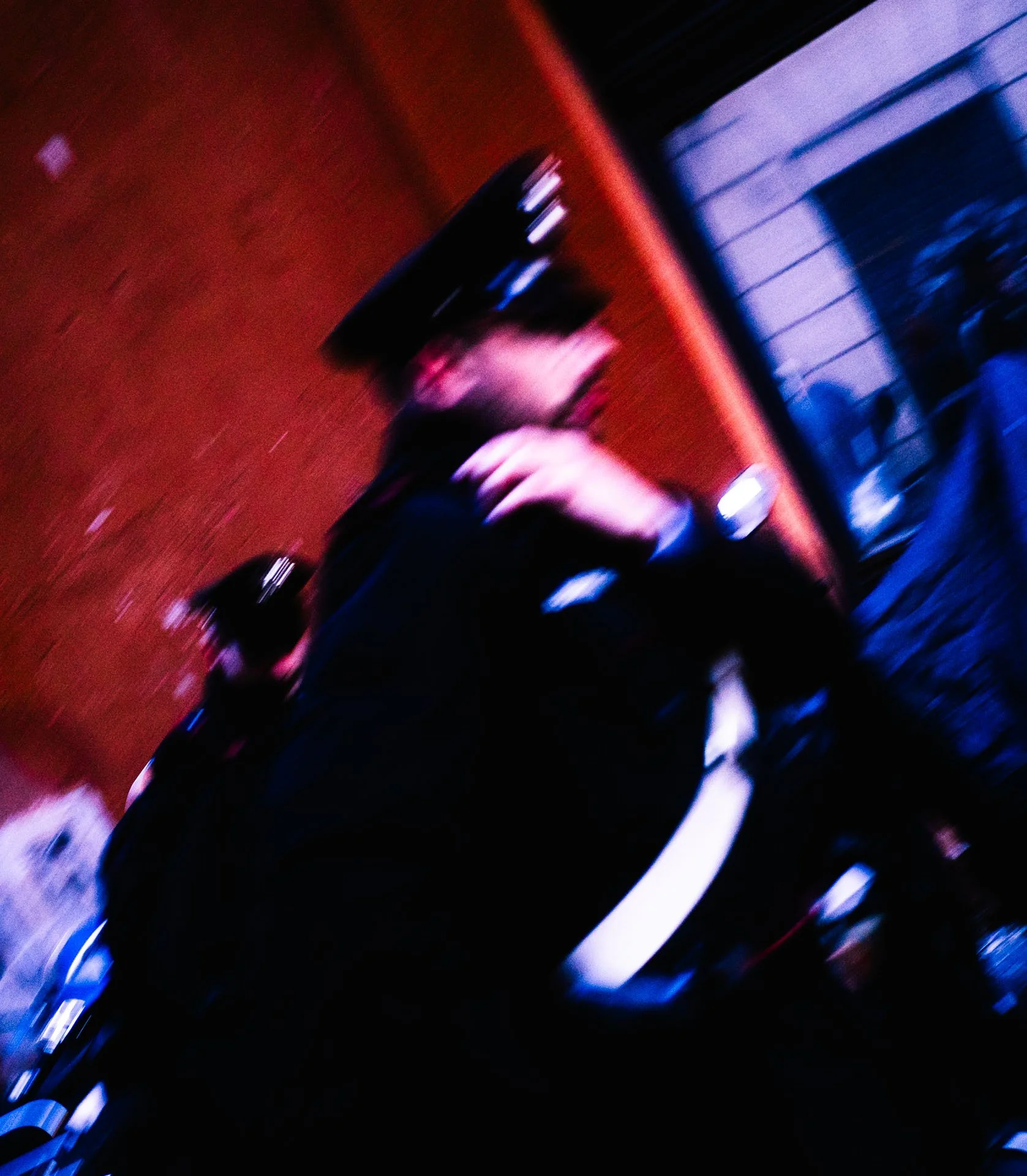
Rome. Passing by the police officers. This was intentional motion blur — slow shutter, camera moving with the scene. The GR IVx's snap focus let me react faster than I could think.
That shot above is one of my favorites from the trip. It's not "technically correct" by any standard measure — deliberately blurred, tilted, chaotic. But it captures something true about that room at that moment. The GR's compact grip means you're naturally holding it looser, which paradoxically helps with this kind of expressive shooting.
The bubble days in Rome
In Rome, I stumbled upon this scene: a street performer blowing giant soap bubbles near a fountain, surrounded by kids absolutely losing their minds. The kind of spontaneous, joyful urban moment that street photography exists to document.
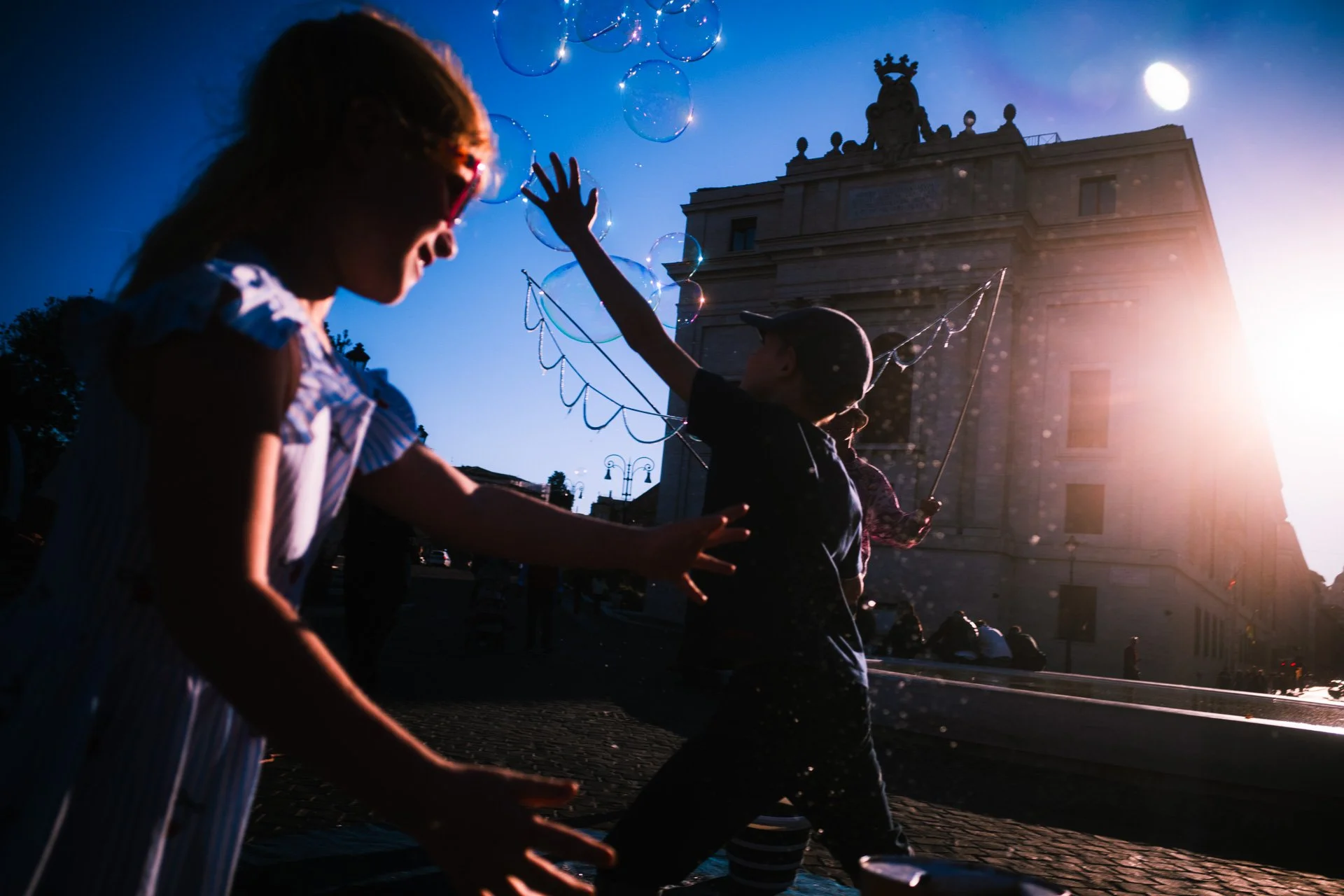
Golden hour. The backlight turned everything into silhouettes. I got low, shot wide open.
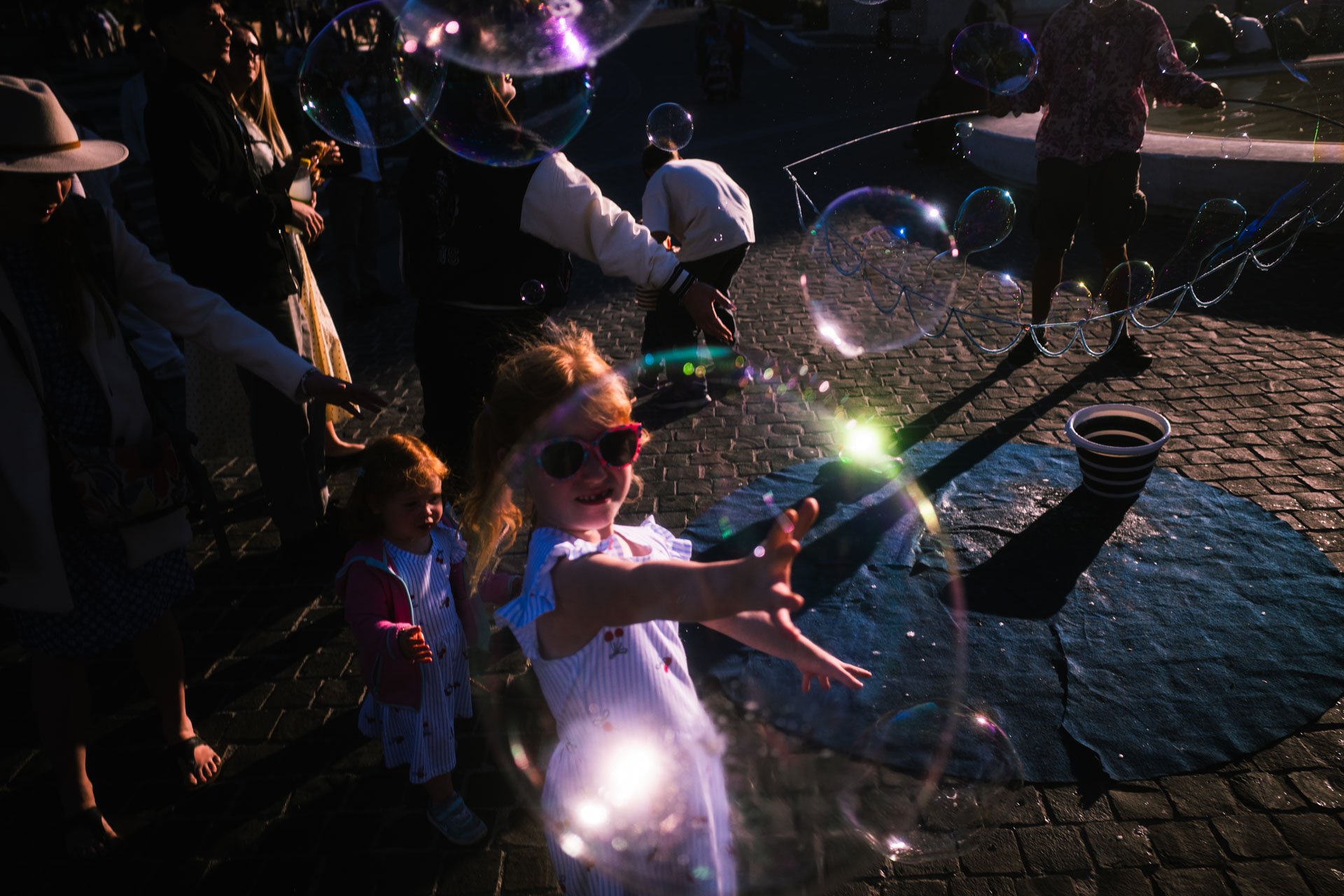
Same scene, different angle — elevated, shooting down. The GR makes this easy without drawing attention.
These two frames were shot within minutes of each other. The first is from ground level — I got as low as I could, letting the late sun silhouette the kids against the building behind them. The second I shot from above, working the elevated vantage that Ricoh's tilting screen (a new addition in the IVx) makes genuinely easy without looking conspicuous.
The lens rendering here is worth noting: the bubble iridescence and lens flares aren't artifacts I tried to remove — they're a feature of how the GR renders backlit scenes. It's a specific look. Not clinical. Not trying to be invisible. The camera has a personality, and you either work with it or you don't.
I worked with it.
What the GR IVx is not
Let's be clear about the tradeoffs, because this camera has real ones. There is no viewfinder — you're working from the rear screen only, which in bright Italian midday sun can be genuinely difficult to read. Battery life is mediocre; carry two. The f/2.8 fixed aperture means you have no flexibility there — if you need f/1.4, you need a different camera. And the 40mm is the only focal length you're getting.
For any kind of controlled shoot — portraits, product, events — I'd still reach for something else. But for travel and street? Nothing I've used competes with the combination of image quality, size, and the way it disappears into a scene.
FAQ:
-
Yes — if your priority is portability and candid image quality. The APS-C sensor punches well above its size class, and the compact form factor means you'll actually have it with you at all times. It's not a replacement for a full system, but for travel-first shooting it's exceptional.
-
Strong up to ISO 3200, workable at ISO 6400. The noise character skews toward organic grain rather than digital smear, which suits street and documentary styles. The f/2.8 aperture helps but isn't a substitute for a faster lens in extremely dark scenes.
-
The IVx adds a higher-resolution 26MP sensor (up from 24MP), a new tilting rear LCD, improved autofocus with subject tracking, and a refined image processor. The 40mm equivalent focal length remains the same. Battery life and form factor are largely unchanged.
-
For documentary and street-focused travel, yes — it's a credible replacement. For versatility (portrait, zoom, video), no. It depends entirely on what kind of travel photographer you are and what you're trying to bring back.
The bottom line
Two months in, the GR IVx has fundamentally changed how I approach personal photography. It's made me slower in the best way — one lens forces intention. It's made me invisible in scenes I would've disrupted before. And it's produced some of the images I'm most proud of.
Italy was the right proving ground for it. The light, the streets, the density of human life happening in every direction. If a camera can hold up there, it can hold up anywhere.
I'll be bringing it to Korea and China next. I'll report back.
I also do travel content, brand photography, and web design for small businesses across Long Island and NYC. If you're looking for a creative partner — let's connect.
06/04/26